
– June 18, 2026 –
Global oil disruptions are impacting every industry — but the right partnerships can change that.
There’s a quiet tax being levied on American business right now. You won’t find it on a single invoice, but you’ll feel it — in delivery costs, job site budgets, restaurant margins, and bottom lines across nearly every sector. It’s the downstream weight of a global oil supply disruption, and it’s landing on industries far removed from any pipeline.
Understanding what’s driving these costs and, more importantly, where you can take control — that’s the conversation every business leader needs to be having right now.
A Narrow Strait With a Wide Shadow
The Strait of Hormuz is barely 21 miles wide at its narrowest point. But through it flows roughly one in every five barrels of crude oil traded globally. When disruptions constrained that flow, the effects spread fast.
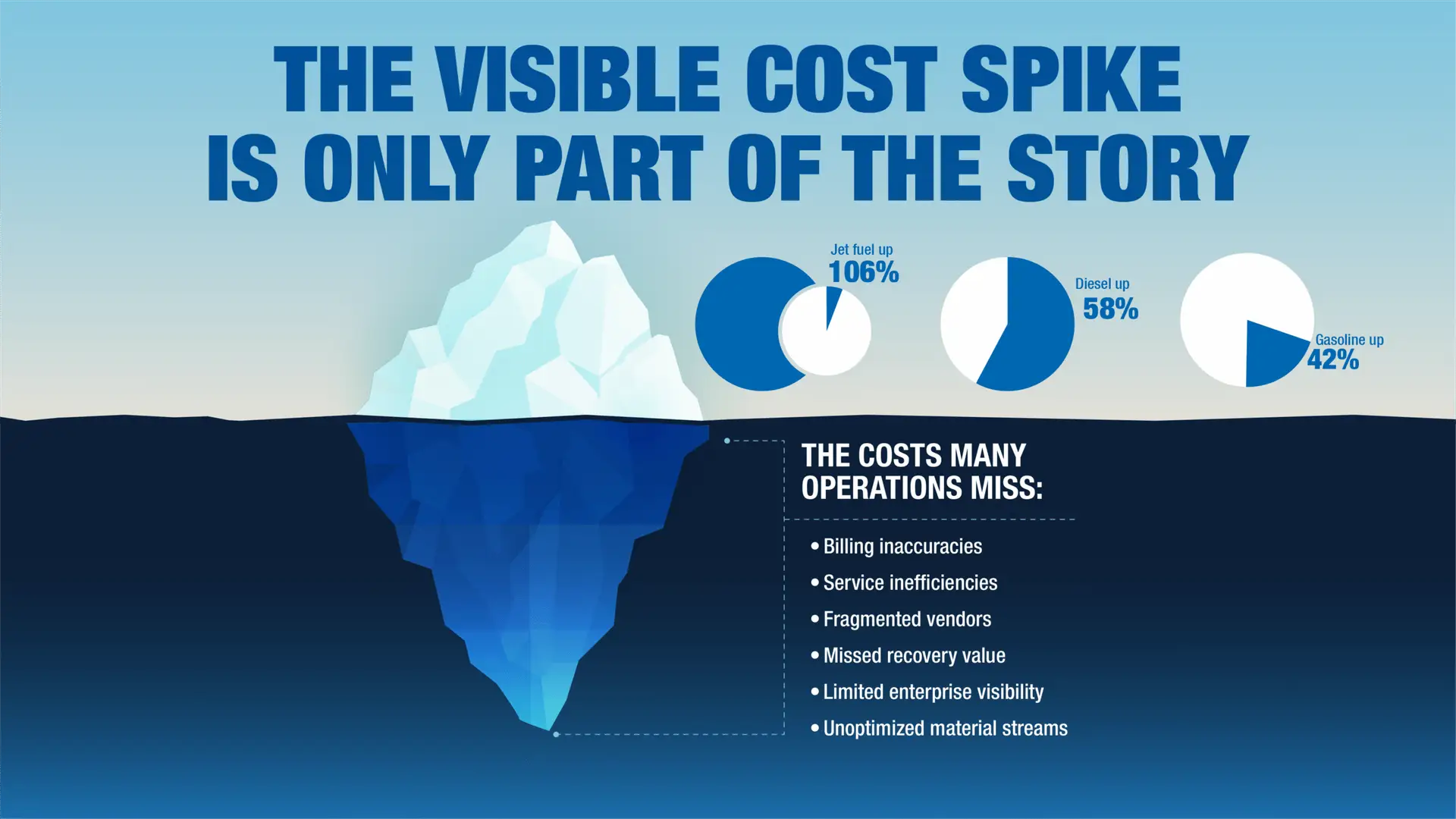
According to the International Energy Agency, approximately 14 million barrels per day remain shut in — the largest oil supply shock the global market has ever experienced. The U.S. is better positioned than most as the world’s largest oil producer, but it isn’t immune. Fuel prices are set in a global market, and the numbers show it:
- Diesel prices: up 58% year over year
- Jet fuel prices: up 106% year over year
- Gasoline prices: up roughly 42% year over year
Diesel and jet fuel are the real story here. They move freight, stock shelves, and connect every supplier to every consumer. When they cost more, nearly everything costs more. And the U.S. Energy Information Administration has assessed that even after conditions stabilize, a full ramp-up of Middle Eastern oil and refining capacity will take months if not years. Businesses are absorbing the cost in the meantime.
Where the Pressure is Landing
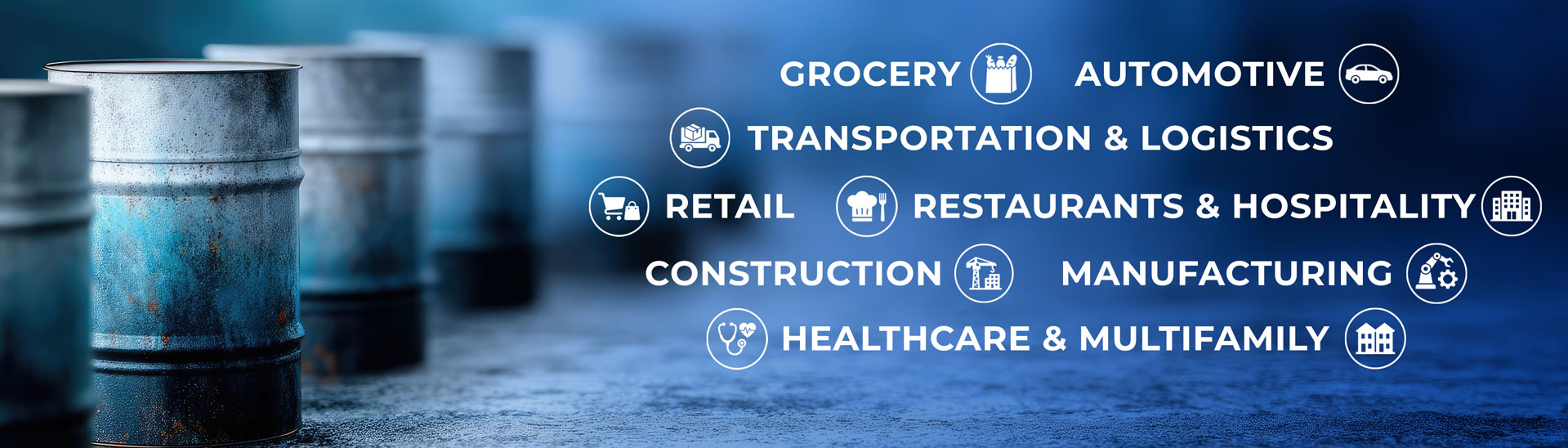
Every industry touches fuel costs in some way. Here’s how the squeeze is showing up across key sectors:
Automotive — Dealerships and service centers face rising costs for parts and materials shipped via diesel. Smart handling of used oil, tires, and specialty materials has real dollar value when margins tighten.
Transportation & Logistics — No sector feels fuel price increases more directly. Trucking fleets and distribution centers are watching operating costs climb. Finding efficiency in material handling and fleet operations isn’t a sustainability gesture — it’s a cost management tool.
Grocery — One of the thinnest-margin businesses in retail, grocery feels every uptick in distribution costs. Food waste, organics, cardboard, and packaging are all streams where smart, ongoing program optimization can reduce costs and recover real value.
Retail — Multi-location chains feel higher fuel and shipping costs across their entire distribution network. Those who have streamlined material streams and vendor relationships are better positioned to absorb the pressure.
Construction — Heavy equipment and material hauls run on diesel. Job sites facing rising input costs still have opportunities: smart handling of debris, metals, wood, and recyclable materials can cut costs and, in some cases, generate recoverable revenue.
Manufacturing — Rising input costs and shipping costs are compounding. For facilities managing complex material streams — from hazardous chemicals to scrap metal — the gap between a well-optimized operation and a poorly coordinated one is significant.
Restaurants & Hospitality — Food costs are rising because getting food to kitchens is more expensive. Used cooking oil, grease trap management, organics, and packaging are cost centers with real optimization potential.
Healthcare & Multifamily — From regulated materials to everyday recyclables, these sectors carry operational complexity that, when left fragmented and unoptimized, quietly drains budgets. Consolidation, compliance, and centralized reporting pay dividends.
The Constant: Hidden Costs That Don’t Have to Stay Hidden
Across every one of these industries, there’s a common thread — costs that aren’t being fully examined, vendor relationships that aren’t performing, and material streams that aren’t managed as strategically as they could be.
Fuel costs and supply chain pressure make these inefficiencies more visible. They also make fixing them more urgent. When margins are thin, the question isn’t whether to find efficiencies. It’s where — and how quickly.
Data, Partnership, and the Long Game
At Quest, we’ve spent nearly two decades building a model around one idea: every business generates materials and operational outputs that can be better managed, better measured, and better optimized — on an ongoing basis.
We don’t show up once and hand you a report. We engage continuously, using your data to surface insights and drive improvement over time. Here’s what that looks like in practice:
- Centralized dashboards and real-time analytics for enterprise-wide visibility
- AI-backed bill auditing to catch vendor billing inaccuracies before they become budget leakage
- Strategic vendor sourcing and management across a national network — so you’re never captive to a single provider
- Transparent audits with actionable outcomes
- Compliance tracking across local, state, and federal requirements
- A single point of contact across more than 130 material streams
That’s what we call “The Power of One.” One team. One relationship. Measurable results across your entire operation.
The Right Partner for a Higher-Cost World
Oil prices will eventually shift — they always do. But the supply chain vulnerabilities and operational inefficiencies this moment has exposed aren’t going away. The world is moving, as economists have noted, from just-in-time to just-in-case. That shift demands leaner, smarter, more strategically managed operations.
The businesses that come out stronger will be the ones that treated cost pressure not as something to weather, but as something to work. That means scrutinizing every cost center, optimizing every material stream, and choosing partners who bring continuous insight — not just occasional service.
There’s still value waiting to be found. The question is whether you have the right partner helping you find it.